
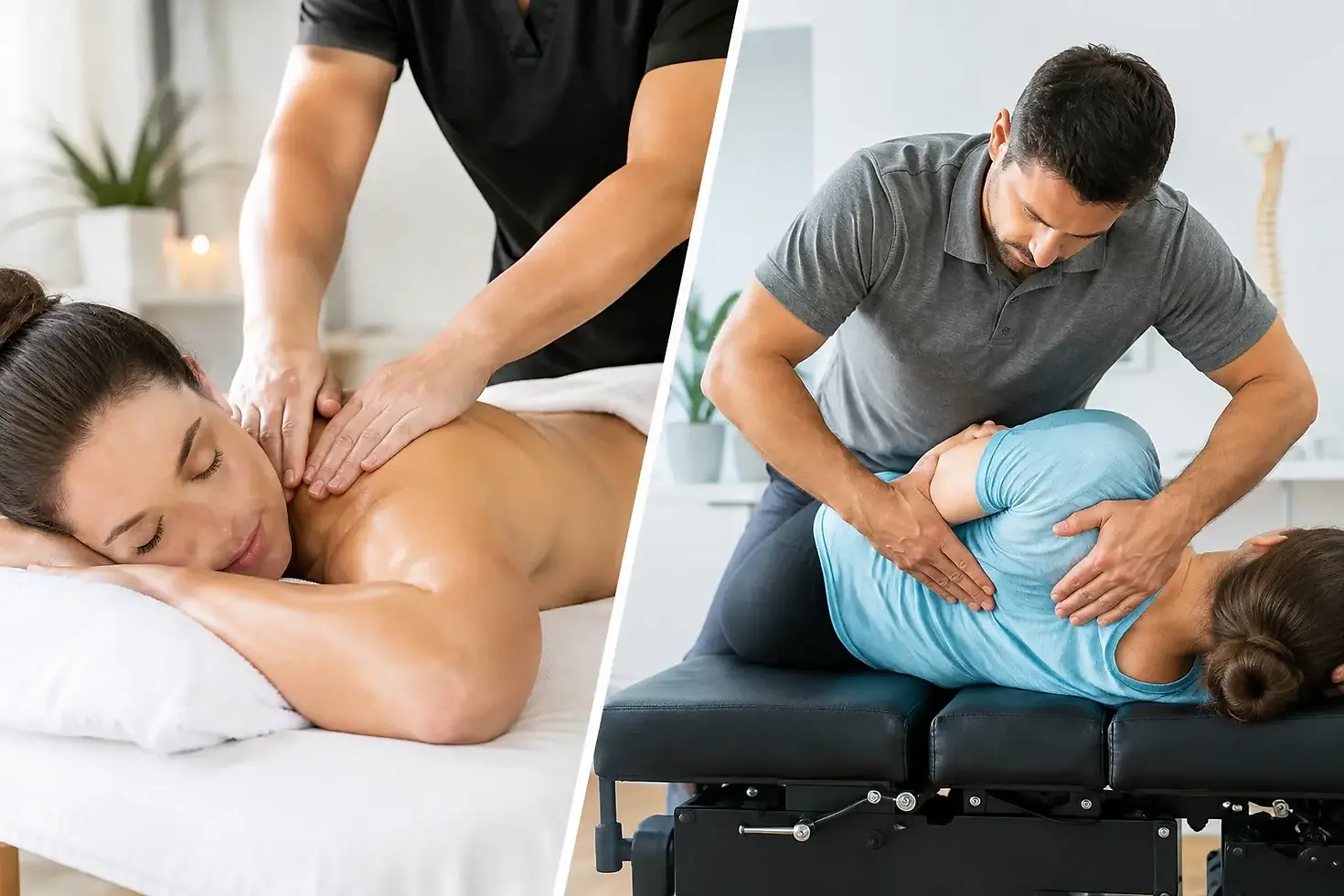
Massage Versus Chiropractic Adjustment for Pain

A stiff neck after a long workweek can feel completely different from sharp low-back pain when you stand up, bend, or get out of the car. That difference matters when choosing massage versus chiropractic adjustment. Both can be valuable hands-on treatments, but they work on different parts of the problem and may be most effective when used together in a personalized plan.
Massage is usually centered on muscles and soft tissue. Chiropractic care focuses on how the spine, joints, nerves, and movement patterns are functioning. If your discomfort involves both muscle guarding and restricted joint motion, treating only one may bring partial relief without fully addressing why the pain keeps returning.
Massage Versus Chiropractic Adjustment: The Main Difference
A chiropractic adjustment is a specific, controlled manual treatment applied to a joint, often in the spine. The goal is to improve joint motion, reduce mechanical restriction, and support healthier movement. When joints are not moving well, surrounding muscles may tighten to protect the area. That can contribute to stiffness, altered posture, and pain with everyday activities.
Massage uses pressure and manual techniques to work with muscles, fascia, and other soft tissues. Deep-tissue massage may help reduce muscle tension, improve circulation in the area, and make it easier to move a tight region comfortably. It is often especially helpful when stress, repetitive work, training, prolonged sitting, or an injury has left muscles feeling knotted or sore.
Neither treatment is automatically better. The right choice depends on what is driving your symptoms, your health history, and how your body responds to care.
When Massage May Be the Better Starting Point
Massage can be a strong first step when the primary complaint is muscular tension without significant joint restriction or nerve-related symptoms. You may notice tight bands through the upper traps after computer work, sore glutes after a long drive, calf tightness after running, or general body stiffness after physically demanding shifts.
It can also be useful when your body is guarded after an injury. Protective muscle spasms are common after a strain, sports injury, or auto accident. Gentle to deeper soft-tissue work, based on your tolerance and stage of healing, may help the area relax enough to begin restoring normal movement.
Massage may fit well if you are dealing with:
Muscle soreness, knots, or spasms
Stress-related neck and shoulder tension
Tight hips, hamstrings, calves, or upper back muscles
Recovery needs after training or repetitive physical work
Tender soft tissue around a joint that otherwise moves normally
A good massage should not feel like something you have to endure. Deep pressure is not always better. The appropriate intensity depends on inflammation, bruising, recent trauma, medication use, and your individual sensitivity.
When a Chiropractic Adjustment May Be More Appropriate
Chiropractic care may be more appropriate when pain is connected to restricted motion, posture-related joint stress, spinal stiffness, or symptoms that change with bending, twisting, sitting, or standing. For example, a person whose low back catches when moving from sitting to standing may have a different need than someone with general soreness after a workout.
An adjustment may help improve movement in a joint that is not gliding or functioning as it should. This can be useful for certain types of neck pain, back pain, rib discomfort, headaches associated with neck tension, and stiffness through the mid-back or pelvis. The adjustment itself is only one part of care. A thorough plan may also include mobility work, home exercises, soft-tissue treatment, decompression, or other supportive therapies.
Chiropractic evaluation becomes particularly useful when symptoms include reduced range of motion, recurring pain in the same area, pain that travels into the buttock or leg, or numbness and tingling. These symptoms do not always mean something serious is happening, but they do deserve an informed assessment rather than a guess.
What about the popping sound?
Some adjustments create a popping sound called joint cavitation. It is caused by changes in pressure within the joint, not bones moving back into place. A pop is not required for an adjustment to be effective, and many chiropractic techniques are gentle and do not involve a popping sound at all.
Why Combining Both Often Makes Sense
Muscles and joints do not operate separately. A stiff joint can cause muscles to overwork. Tight muscles can limit movement and place more strain on a joint. That is why a combined approach is often practical for people with persistent neck pain, low-back stiffness, sports injuries, and work-related discomfort.
For example, someone with low-back pain and sciatica-like symptoms may have tight hip muscles, irritated tissues, reduced spinal mobility, and movement habits that keep reloading the area. Massage alone may temporarily relax the muscles. An adjustment alone may improve motion but leave significant soft-tissue tension behind. A clinician may recommend both, along with targeted exercises and activity changes, to support a more complete recovery.
At Crypto Chiropractic, treatment planning can combine hands-on chiropractic care and deep-tissue massage with therapies such as spinal decompression, e-stim, cupping, red-light therapy, or shockwave treatment when clinically appropriate. The point is not to use every modality. It is to select the care that matches the condition, recovery stage, and goals of the person in front of us.
Your Symptoms Should Guide the Decision
Pain location is helpful, but it is not enough to tell you what treatment you need. Two people can both say they have "back pain" while having very different causes. One may have muscle fatigue from lifting at work. The other may have disc-related pain, limited hip mobility, or a flare-up of arthritis.
A useful evaluation looks at how the problem started, what movements aggravate it, whether symptoms travel, and whether there has been trauma. It should also consider sleep, work demands, exercise, previous injuries, and medical conditions. In some cases, digital X-rays or other diagnostic information may be appropriate before determining the best course of care.
If you have a recent injury, a new severe headache, progressive weakness, loss of balance, fever, unexplained weight loss, loss of bowel or bladder control, or numbness in the groin area, seek prompt medical evaluation. These signs need medical attention beyond a routine massage or chiropractic visit.
What to Expect From a Patient-Specific Plan
The best care plan should have a clear reason behind it. During an initial visit, the provider should listen to your symptoms, assess movement and tender areas, review relevant history, and explain what may be contributing to your discomfort. You should understand why massage, an adjustment, or a combination is being recommended.
For acute pain, the first goal may be calming irritation and helping you move with less discomfort. For chronic stiffness, the focus may shift toward restoring mobility, building strength, and preventing repeat flare-ups. For an athlete, treatment may be coordinated around training and return-to-sport goals. For someone recovering from an auto accident, the plan may need to account for tissue healing, documentation needs, and gradual functional progress.
Home guidance matters, too. The right stretches, movement breaks, lifting modifications, hydration, and recovery habits can extend the benefits of in-office care. A treatment should support your life outside the appointment, not make you dependent on endless visits.
Choosing Care That Fits Your Body
Massage can be an excellent choice for tight, sore, overworked muscles. Chiropractic adjustment can be especially helpful when restricted spinal or joint motion is part of the picture. Many people benefit from both because pain rarely affects only one tissue type.
If you are unsure where to start, choose an evaluation rather than guessing based on a menu of services. A careful assessment can identify whether muscle tension, joint restriction, nerve irritation, injury recovery, or a combination is shaping your symptoms. The next step should feel clear: care that helps you move more comfortably, return to the activities you value, and feel more at home in your body.


Comments